Walk Summary
A short, easy walk around Woolgoolga Headland with excellent coastal views and plenty of wildlife-spotting opportunities. Look out for kangaroos and birds on the headland, turtles and stingrays below and, in season, migrating whales.
Distance 2.5 km
Time 1 - 2 hours
Difficulty Easy
Walk Overview
This is just a short walk in a town you’ve probably never heard of. I hadn’t either until we stopped here overnight on a trip up the coast.
If you do find yourself in Woolgoolga, take the opportunity to walk this headland path. It’s an easy leg-stretching stroll, great if you’re stopping mid-trip, and the coastal views are excellent.
Walking the Trail
The headland walk begins at the Woolgoolga Surf Lifesaving Club behind Woolgoolga Beach. Parking is available in the main beach car park and surrounding streets.
The track winds around the headland on a paved path, but you can explore the shoreline a little more by following a side path through the grass below.
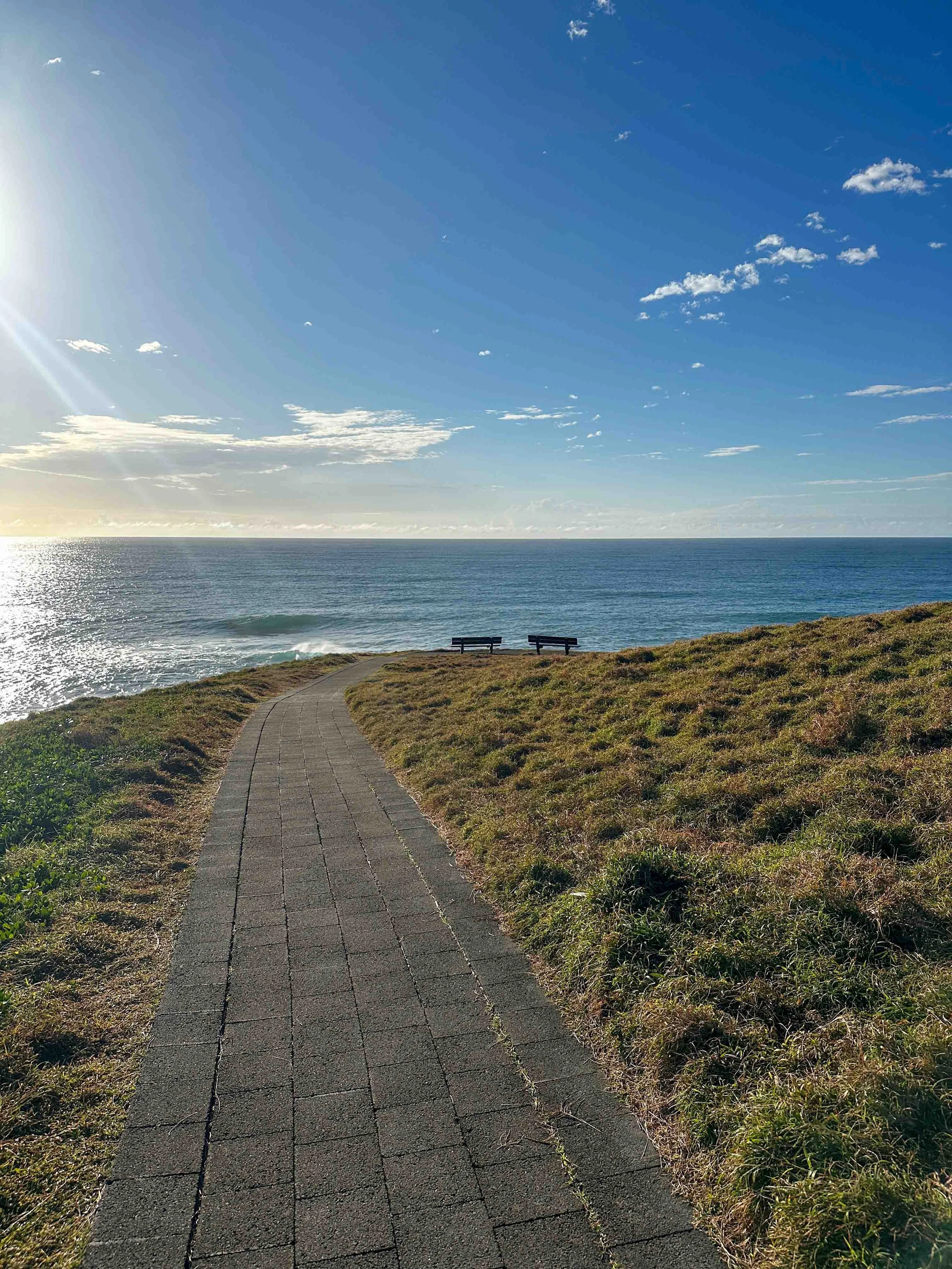
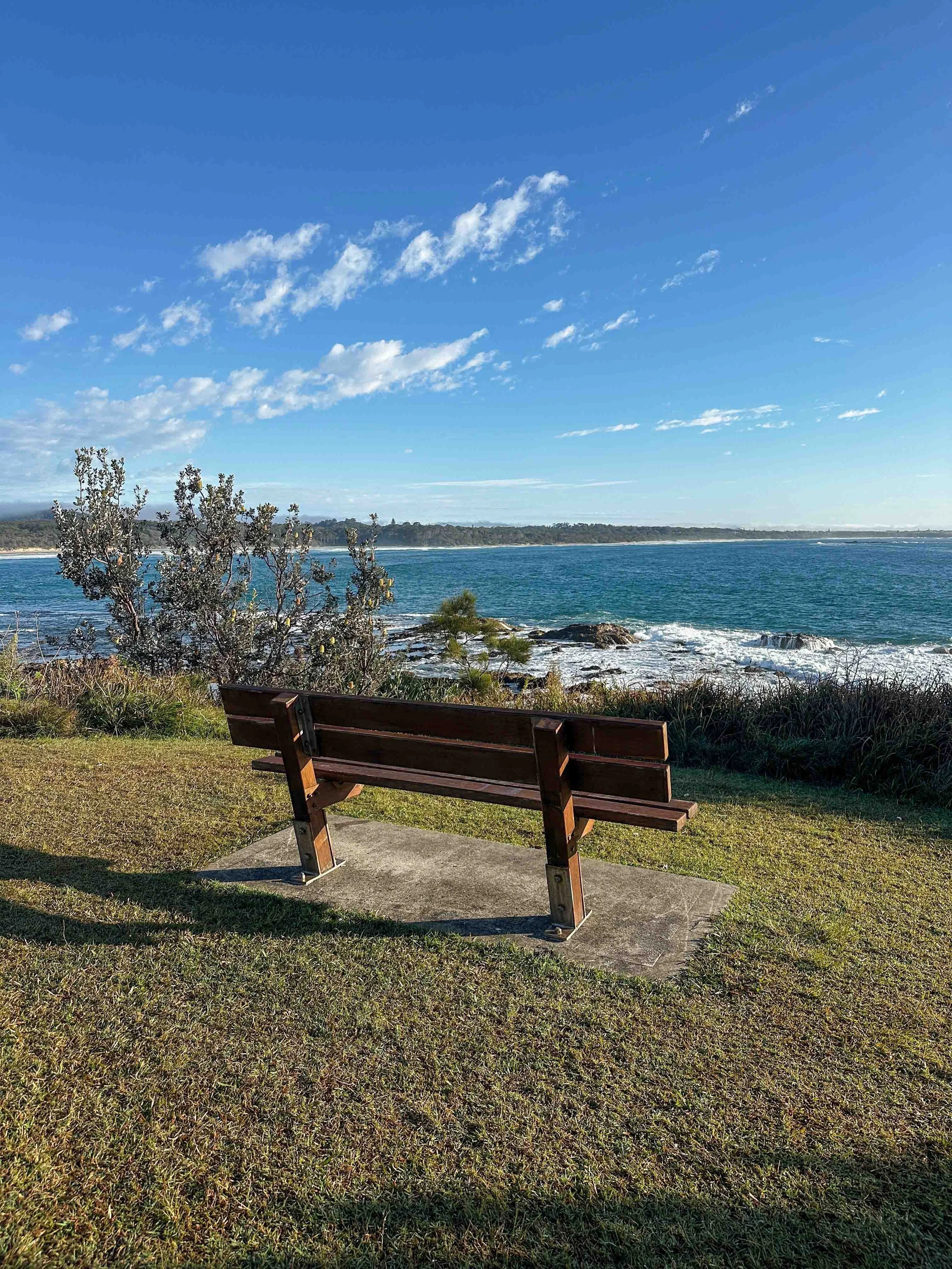
From the top of the headland, looking north you can see Woolgoolga Beach and Yuraygir National Park, with Woopi Back Beach to the south.
Out to sea you might spot the lighthouse perched on South Solitary Island.
The final part of the walk takes you through some local streets and back to the start.
Wildlife at Woolgoolga Headland
I did this walk in the early morning. Most others on the trail were friendly locals walking their dogs, including a lovely man called Tim — his wife calls him ‘Timformation’ — who told me all about the local wildlife and pointed to some rocky shallows off the headland where turtles and stingrays are regularly seen.
Woolgoolga Headland is known as one of the best whale-watching spots in the Coffs Region. Sadly I didn’t see much action here, but I did see a number of Eastern Grey Kangaroos grazing and lazing on the lawn.
In the trees along the first part of the trail and on the headland itself were quite a few birds, seen and heard.
I saw a couple of Butcherbirds in the bushland and a pack of Rosellas in the park. Up on the headland were Willie wagtails, an Australian pipit, Welcome swallows and Magpie-larks.
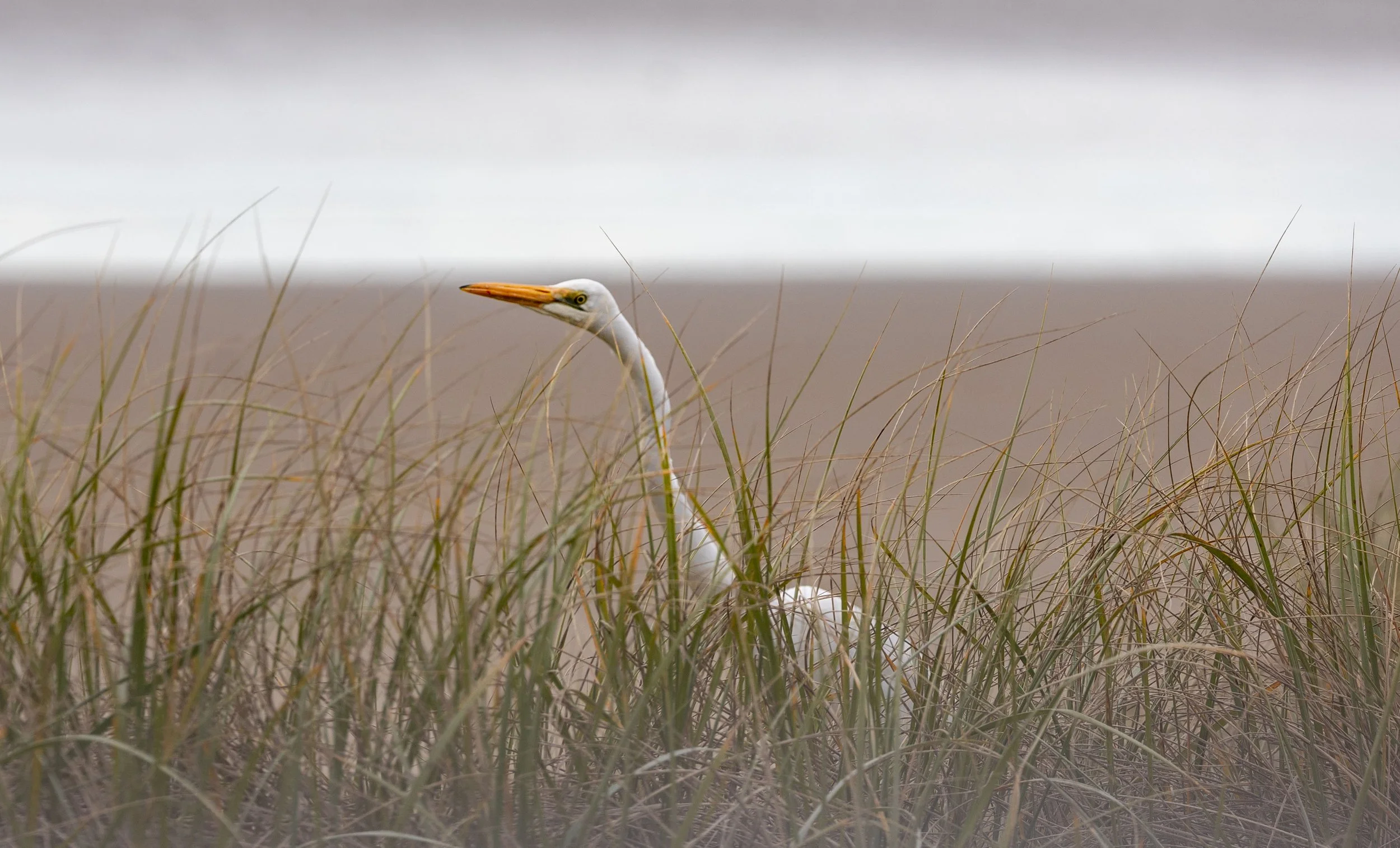
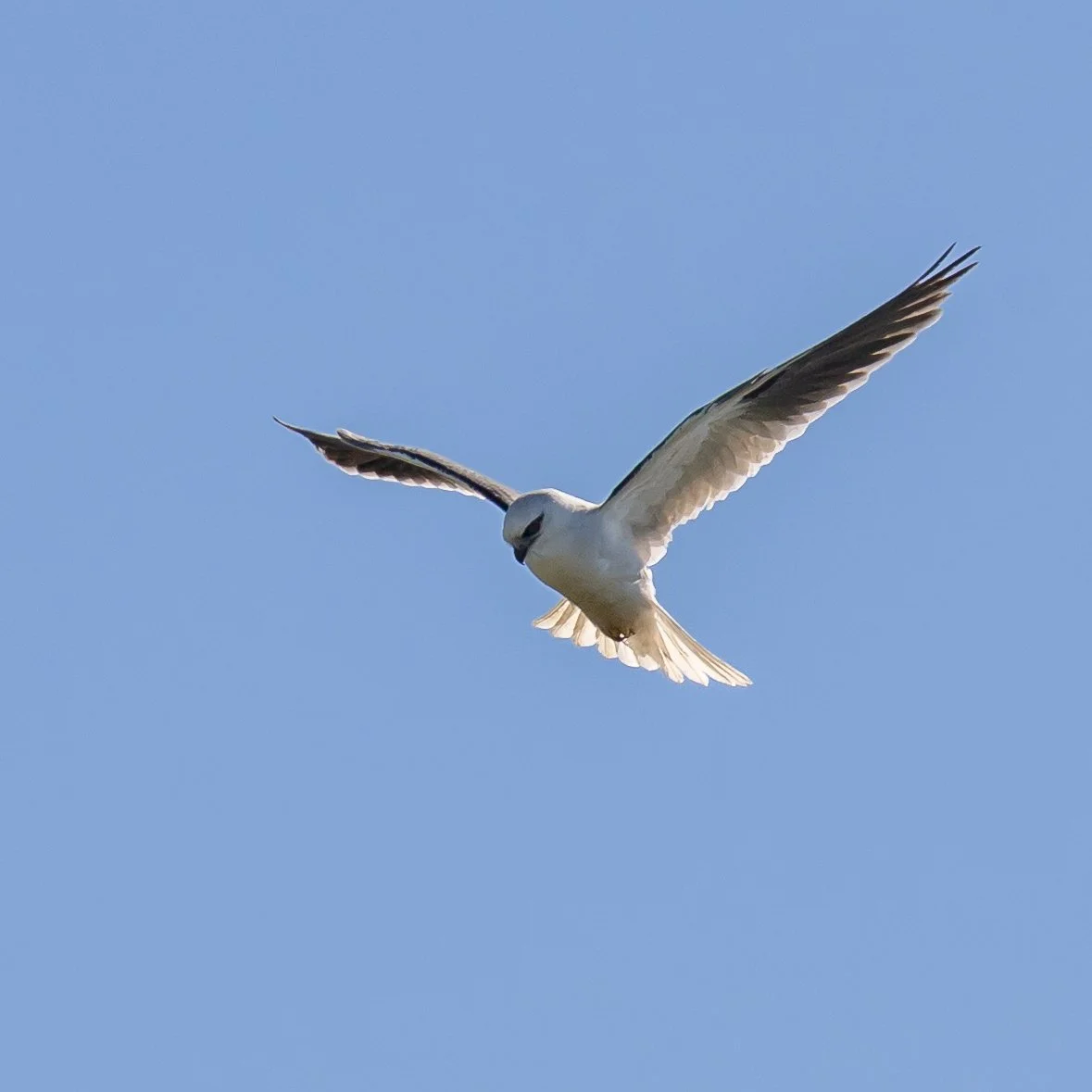
And down by the water I saw a few seabirds — some Crested kerns, a Black-shouldered kite and, down on the beach, a Great egret foraging among the sand dunes.
For recent bird sightings at Woolgoolga Headland and surrounds head to eBird.
Trail Tips
Take the grassy side path if you want to explore a little closer to the edge of the headland.
Take a hat and sunscreen, and swimmers if you fancy a swim afterwards.
A jacket is useful on a windy day — it can get quite breezy on the headland.
June to October is a good time to look for migrating Humpback Whales.
Early morning is a lovely time to walk and a good time to look for wildlife.
The walk forms part of the much longer Solitary Islands Coastal Walk if you want to explore further.